
We’re creating a world where law, policy and professional expertise speak human.
Lejacie brings legal, justice and public-serving professions together to find where people fall through the gaps, pull frontline knowledge and lived experience into the work, and turn it into something you can use on a Tuesday.
Explore the researchThe gaps we work to closeHow Lejacie works
The Paper-to-Person Gap
For professionals
- What does this change in practice?
- What do I need to verify?
- What needs judgement, explanation, documentation or escalation?
For people
- Does this apply to me?
- What can I rely on?
- What do I do next?
We’re sick of watching information that was meant to help people die inside a 60-page PDF.
The law exists. The policy is approved. The report is published. Someone still has to work out whether it applies, what they can rely on, and what to do next, often tired, rushed, and holding more than one problem.
Usually asked
Was it published?
We ask
Could they use it when it mattered?
The gaps we are working to close
Lejacie works to close the distance between what law, policy, research and professional expertise know, say or promise, and what people and professionals can actually use in real life.
We start with the gap between information and action. Then we look at what happens when AI enters the pathway, and when knowledge, responsibility and support get trapped between professions and systems.
Our purpose is to make law work in real life, for the people doing the work and the people who need their help.
Meet Maya
She is a fictional composite, not a client and not safety advice. She is 34, has two children, and has just left Daniel. She needs safety, housing, money, the school, a parenting arrangement and work at the same time. The three gaps below are the same life, seen at three breaks.
Late at night
Maya searches at night on a phone she may not control. The pages exist. They do not become a pathway. She cannot tell what is urgent, what is safe, or what comes first.
01
The Paper-to-Person Gap
Law, policy, research and professional knowledge can be correct at the source and still fail the people expected to use them.
A law is passed. Guidance is published. A report is released. A policy is approved. Someone still has to work out what matters, whether it applies, what they can rely on, and what to do next.
If a professional or a member of the public cannot understand, reach or use consequential information in the conditions of real life, it is not yet doing its job.
Lejacie investigates how expertise becomes:
- Safe to say: accurate, sourced, qualified, within authority
- Safe to reach: it gets to the person who needs it, in time, in a form they can use
- Safe to use: clear enough for a next step, honest about limits, and obvious about when to get further help
She asks a chatbot
Maya asks a chatbot if she can stop Daniel collecting the children from school. The answer is calm and confident. It does not know her risk, her orders, her state, or whether he has the phone. It cannot take the next step with her.
02
The AI-to-Human Gap
AI is changing how people find information and how professionals work. An answer is not accountable support.
People turn to AI before they can reach a professional. Professionals use it to research, draft, analyse and prepare. It can help. It can also hide the source, the uncertainty, and who is responsible.
Lejacie looks at what people can safely rely on, what professionals must verify, and where human judgement has to stay visible, especially when someone needs correction, context, escalation or review. The work is the pathway from a generated answer to qualified human help.
Tap each service Maya has to tell
Times Maya has told her story: 0
Who carries the join? Maya.
The next morning
Maya tells her story to health, family violence, legal, housing, the school, work. Each service does its part. She carries the join. A referral is not a handover.
03
The Silo Gap
People live one life. Systems split it into separate jobs.
Someone may need law, safety, housing, health, disability, family, income or education at the same time. Each profession holds one piece.
When knowledge, responsibility or support does not travel, the person repeats the story, carries the file, manages the referral, and repairs breaks they did not create.
Lejacie investigates what needs to move between professions: the right information, clear responsibility, practical support, a safe handover, and a path when the first service cannot help.
The future of the professions runs through all three
AI, new regulation, changing public expectations, workforce strain, work that now crosses systems. Across every gap we ask what these jobs need to become so expertise stays usable, judgement stays accountable, and people are not left holding fragmented systems together alone.
Our work streams
-
After the Law
We investigate what happens after law, policy and research leave the paper, and why they fail in real life.
We follow the gap: where meaning drops out, where handover breaks, where a person still falls through even though the document exists.
Explore the research -
Legal knowledge translation
We turn research and professional knowledge into practice intelligence.
That means designing regulated information so it is usable and human without losing its legal bounds: accurate enough to stand behind, clear enough to act on. This is the Paper-to-Person work, including Safe to Say, Safe to Reach, Safe to Use.
Safe to Say, Safe to Reach, Safe to Use -
Lejacie Labs
Six-week working groups that put different professions on the same gap.
The break is usually between silos. We convene the people who each hold a piece and require something useful at the end: a tool, protocol, pathway, template or practice method.
Explore Lejacie Labs -
The future of our professions
A space for honest conversation about what is difficult, what is changing, and what these jobs need to become.
In an age of AI, misinformation and collapsing public trust, we use interviews, roundtables, forums and workshops to redesign professional practice so it works for the people doing the work and the people who need their help.
Professionals From the Future
Our articles
Check out the recent conversations we’ve been having.
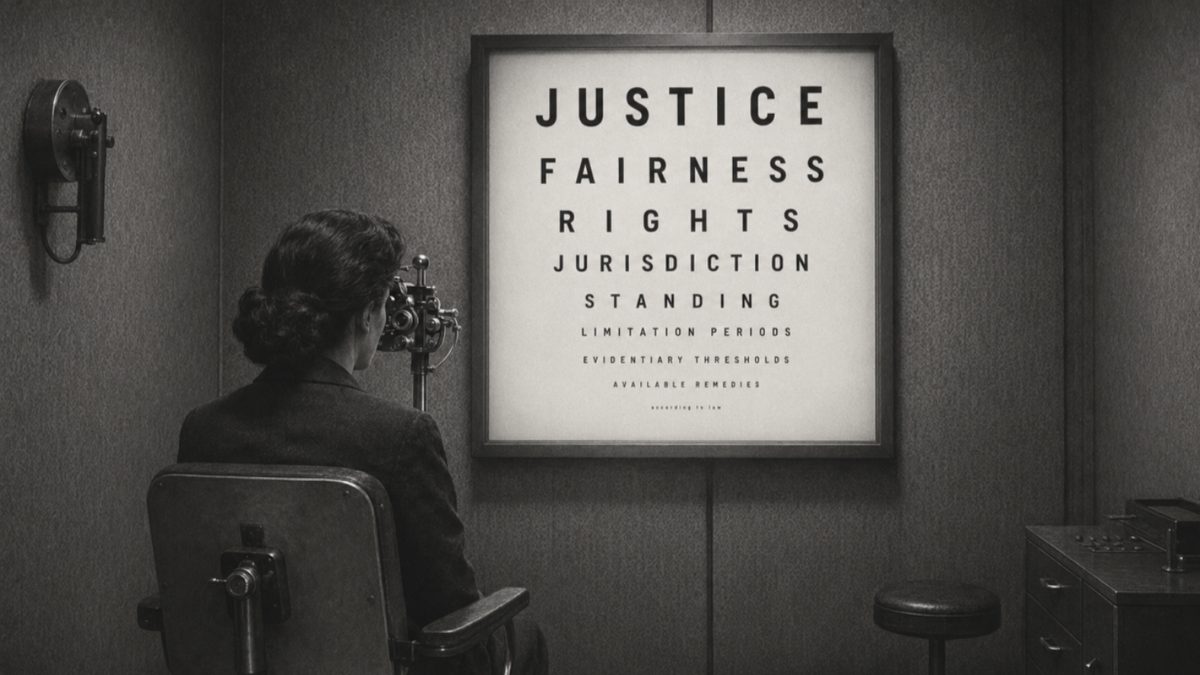
AI · Public legal understanding
AI Is Hallucinating the Justice System We Told People Exists

AI · Courts and self-represented litigants
She Couldn’t Afford a Lawyer. The Court Punished Her for Using AI.

Law and usability
The Law Was Written to Be Followed, Not Understood (And Plain English Isn’t Going to Fix That)
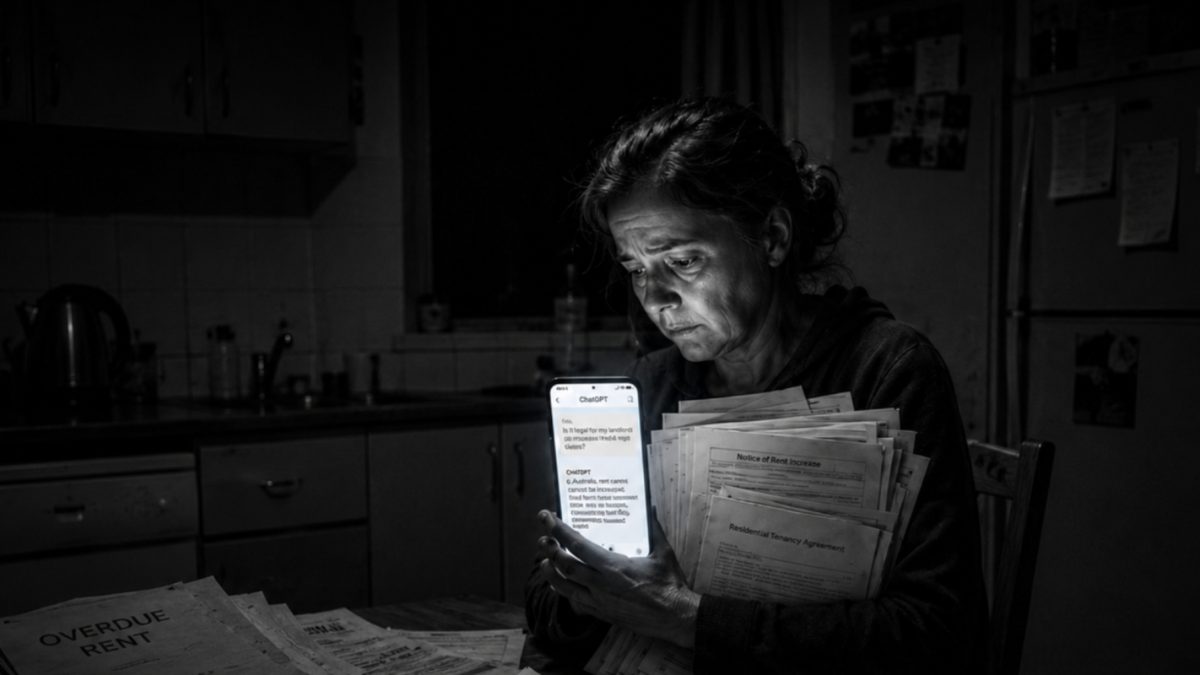
Future of the legal profession · AI
The Legal Profession Left a Gap for 92% of Australians. So ChatGPT Became the Largest Legal Aid Provider. Now What?
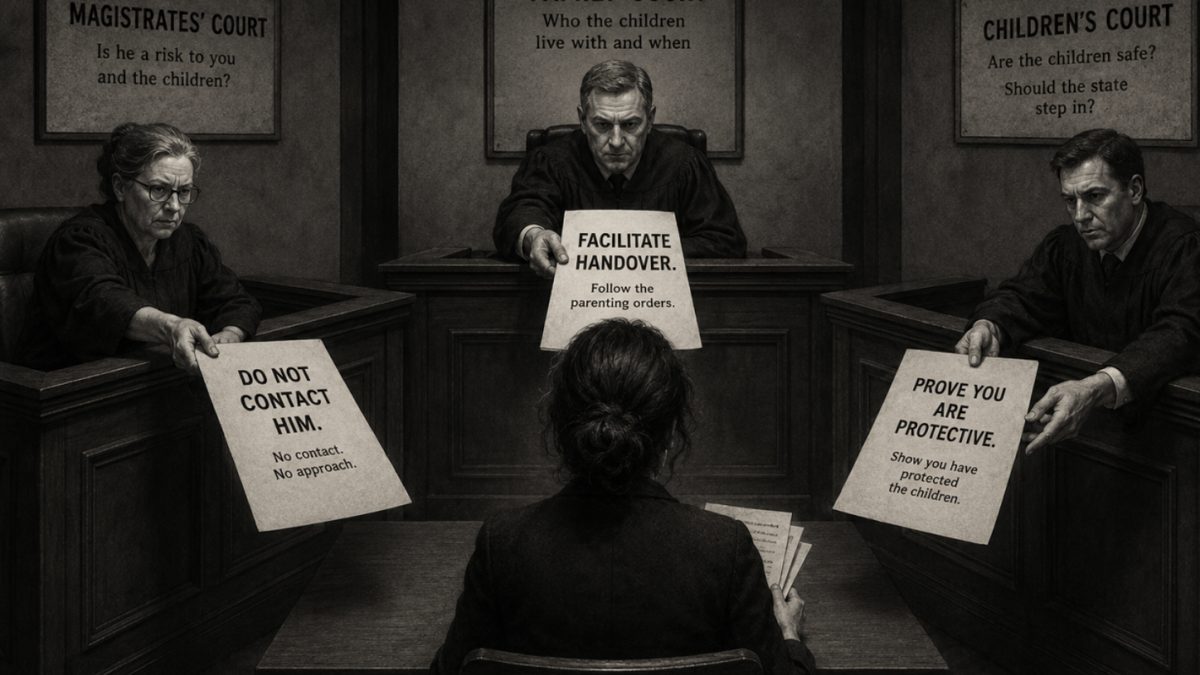
Family law · Courts
She Left. Now She’s in Three Courts, and She Wants Out of Those Too.
Subscribe to After the Law and LegalLens
New investigations and practice intelligence, straight to your inbox. LegalLens tracks law, regulation, policy, judgments, research, professional standards, AI and public expectations.
Who we are for
Lejacie is for people inside legal, justice and public-serving work who can see the distance between what is written and what people can actually use.
Especially where law, policy, safety, technology and everyday life meet.
In the work
- Lawyers
- Educators
- Frontline practitioners
- Team leaders
- Researchers
- Policy and reform people
- Regulators
- People designing digital or AI tools for public systems
Across the field
- Legal and justice services
- Child safety and family violence
- Disability and health
- Community and legal assistance
- Government and regulators
- Universities and professional bodies
- Housing and family support
And the people the systems are for
Lived experience is part of the work, not a consultation add-on. It shows where information fails and where a pathway breaks.
If you are trying to make public-serving knowledge usable in real life, you are in the right place.
The future we are working toward
A future where law, policy, research and professional knowledge work in real life, not only on paper.
Where legal, justice and public-serving professions are connected enough to see one life, equipped enough to act on it, and honest enough about the joins between them.
That looks like this
People do not repeat their story, carry the file between services, or repair a pathway that was supposed to hold.
A referral means someone stays responsible for the next step, not another number.
Law, policy, research and safety information can be understood, reached and used by the people expected to rely on them.
Professionals have the time, tools, relationships and backing to use judgement, not only to survive a process.
Lived experience and frontline knowledge shape the systems built in their name.
AI helps someone find accurate, accountable human support. It does not become a confident dead end.
Professions work across boundaries without losing clarity about responsibility, privacy, safety and the edge of their role.
Hard-won judgement is written down and handed on, instead of leaving when someone retires.
New professionals enter fields that treat curiosity, collaboration and practical care as seriously as technical expertise.
In one line
People do not have to hold broken systems together alone, and professionals have what they need to make the next step work.
Who’s behind it

Meet Chami
Chami Rupasinghe is the founder of Lejacie and an admitted Australian lawyer (non-practising).
What does this mean for me?
Can I rely on it?
What am I supposed to do now?
For almost a decade, she has worked in the space between what professionals know and what people can actually use, especially when the knowledge comes from law, legislation, policy or research.
She kept meeting people who were handed important information and left thinking: What does this mean for me? Can I rely on it? What am I supposed to do now?
She also worked alongside professionals who wanted to help, but knew that one missing fact, overlooked exception or overconfident explanation could cause real harm. So they qualified, cautioned and referred. Often for good reason. Yet the person still had to work out the next step alone.
Meanwhile, the internet was full of people with none of those reservations. Misinformation offered neat answers. AI could produce a confident response in seconds. The careful, responsible answer was often the hardest one to find, understand or use.
Chami founded Lejacie because she did not think those were the only choices: a confident answer that misleads, or a careful answer that leaves someone stuck.
That is why she developed Safe to Say, Safe to Reach, Safe to Use: a method for helping important expertise remain accurate, properly bounded and professionally responsible, while giving a real person enough clarity to understand what matters, judge what they can rely on and work out what to do next.
Chami does not provide individual legal advice or representation.
About LejacieExplore Safe to Say, Safe to Reach, Safe to Use
Why we exist
- A law can technically protect you and still be almost impossible to use.
- A policy can be beautifully written and fall apart the minute it meets a real person.
- A research paper can contain something genuinely important and spend the next five years sitting behind a journal paywall.
- And a professional can know exactly what they are doing and still be trying to explain something complicated at 4:47pm on a Tuesday when they are exhausted, the person in front of them is overwhelmed, and nobody has enough time.
We think that is a problem worth fixing.
Lejacie exists to help close the gap between what we know on paper and what actually works in real life.
- We want laws that protect people to actually reach the people they were written for.
- We want policy to work for the people who have to live with it, including people whose culture, language, disability, trauma, family, community or circumstances were not necessarily imagined when the first draft was written.
- We want good research to escape the PDF and change what somebody does on an ordinary Tuesday.
- We want professionals to be able to be careful and useful. To explain things properly without having to choose between helping someone and protecting themselves from getting it wrong.
- We want the professions people rely on for their rights, health, safety and futures to be sustainable for the humans doing the work too.
- And we want AI to make those professions better, not hollow them out. Used well, it could reduce repetitive work, widen access, make information easier to use and create space for the judgement, relationships and responsibility that still need a human. Used badly, it can reproduce bias, manufacture certainty and make already confusing systems even harder to navigate.
- So we study what happens when expertise leaves the page.
- We investigate where it breaks.
- We bring together the people who each hold a different part of the answer.
- And we build and test better ways for law, policy, research, technology and professional expertise to actually reach the people they are meant to serve.
That is the future we are interested in.